Recent Posts
Archives
Share This Blog


Categories

Join 1,165 other subscribers
The Natural Health and Holistic World According to Dr Akilah
Thanks in part to improvements in screening, the rates of new colon and rectal cancer diagnoses have been falling in the United States for people ages 50 and older. But for people under 50, for whom routine screening is not recommended, rates seem to be increasing significantly.
Researchers from The University of Texas MD Anderson Cancer Center looked at data from more than 393,000 people diagnosed with colon or rectal cancer between 1975 through 2010 who are part of the National Cancer Institute’s Surveillance, Epidemiology, and End Results (SEER) registry. Based on current trends, they predict that by 2030 the incidence rates among people ages 20 – 34 years will increase by 90% for colon cancer and by 124.2% for rectal cancer. Among people ages 35 – 49 years, they predict the incidence rates will increase by 27.7% for colon cancer and by 46% for rectal cancer.
“The increasing incidence of colorectal cancer among young adults is concerning and highlights the need to investigate potential causes and external influences such as lack of screening and behavioral factors,” say the study’s authors. They note that obesity rates have increased significantly in the United States, and obesity is a major risk factor for colon and rectal cancer.
The study was published in the January 2015 issue of JAMA Surgery.
Most sunscreens contain toxic ingredients or endocrine disrupting chemicals that in many cases may actually promote skin cancer growth and free radical production in the body. Even natural, commercially available sunscreens often have toxic ingredients!
Considering many people these days are actually Vitamin D deficient, I consider lack of sun exposure to be a much bigger problem than too much exposure. Vitamin D deficiency has been linked to many types of cancers including the most deadly types of breast cancer. Lack of Vitamin D has also been linked to problems during pregnancy including pre-eclampsia, gestational diabetes, premature labor, and more.
As a society, we’ve literally cut off our nose to spite our face when it comes to sun exposure. To avoid skin cancer, we’ve shunned the sun and the Vitamin D our bodies produce with sun exposure.
On top of that, sun exposure itself is not the only factor linked to skin cancer, and many other factors, such as Omega-6 Vegetable Oil consumption can have a big impact on skin health!
Wellness Mama stops here
With skin cancer now the most common form of this deadly disease in the world, everyone knows how important it is to protect the body’s largest organ when going out in the sun. But many health conscious people are wary of slathering on thick layers of chemicals on a daily basis, and with good reason. Simply reading the list of ingredients on a common commercial sunscreen product usually reveals an extensive assortment of impossible to pronounce compounds.
Fortunately, those who do worry about the dangers of overexposure to the sun yet do not want to rub potentially toxic substances into their skin do have some wonderful alternatives: natural oils. Many cold pressed oils from common vegetables, nuts and seeds have the ability to filter the sun’s powerful rays, diluting them so that you can enjoy more time in the outdoors. Natural oils also usually contain powerful substances that protect your skin from damage at a cellular level, providing additional benefit when used as sunscreen.
This rich oil is one of nature’s best skin guarding oils, providing a level of protection from the sun that matches high end commercial sunscreen products. Carrot seed oil is very concentrated and should be mixed with a carrier oil to create a highly effective natural sunscreen that can be used on a daily basis. According to a 2009 study in “Pharmacognosy Magazine” natural sunscreen products containing carrot seed oil have an SPF of 38-40.
Carrot seed oil is also a rich source of the antioxidant beta-carotene, which gives it (and carrots themselves) their orange hue. This powerful natural compound has been found to have a slew of positive benefits on human health, including the ability to protect against certain kinds of cancer and boost the immune system. Because it has been found to specifically protect against UV damage, beta carotene is also used extensively in the skin care industry.
Highly absorb-able and packed with skin enhancing properties, red raspberry seed oil is probably nature’s best full spectrum sunscreen. With SPF levels between 25 and 50, it provides protection from not only UVA and UVB rays, but even UVC as well. For this reason, red raspberry oil is frequently added to high end sunscreens produced by cosmetic companies.
But red raspberry seed oil does much more than just protect your skin from the sun when applied topically, it can also drastically improve skin quality. This is due to the high proportion of omega 3 and omega 6 oils that it contains as well as vitamins A and E. Red raspberry oil is used as a natural cosmetic and moisturizer and is even credited with being able to reverse severe damage like scars and stretch marks.
Inexpensive, easy to find and sweet smelling, coconut oil is a staple skin care products of traditional tropical societies all over the world. Worn when going out in the sun it provides a moderate level of protection against the sun’s rays; it was found to have an SPF rating of 8 in a 2010 study published in the scientific journal “Pharmacognosy Research”.
Coconut oil is also extremely moisturizing, and is known for giving the skin a radiant and healthy glow as well as a silky soft texture. This due to its high level of medium chain fatty acids, which penetrate deep into the skin and preserve its moisture.
The deep green-yellow color of cold pressed virgin olive oil is a sign of its natural sunscreen ability, as it provides medium level protection from UV rays. It was given a rating of SPF 8 by the study in “Pharmacognosy Research”.
Olive oil also contains a class of antioxidants known as polyphenols that give it health promoting properties when consumed. When applied to the skin, these same polyphenols help prevent age and environment related damage, including wrinkles and fine lines.
The golden oil of this delicious nut is another common and easy to find oil that makes a great light natural sunscreen. The same study mentioned above found that almond oil provides a natural protection level of SPF 6, on par with many suntan lotions sold commercially.
Almond oil is also rich in vitamin E, which rejuvenates the skin’s surface and as an antioxidant and protects the cells and membranes of the skin.

Hair fall itself is not a problem, but a symptom. When you get hair fall, thinning of hair in patches from head, or just overall thinning, which you cannot control, then you have to understand that there is always an underlying cause. This underlying problem, deep rooted in your body system makes hair fall, and also brings on other apparent and unapparent problems in body.
Hair thinning due to genetics
The most common hair thinning problem in men, referred to as hereditary baldness, and in women, referred to as Alopecia, is a genetic problem. They are programmed by hereditary traits to get shrinkage in their hair follicles with time. This results in very less space inside follicles to hold a shaft of hair and hair falls off.
To prevent this problem, one can take medicines and supplements which alter chemicals and hormone levels in the body to prevent shrinkage of follicles, and generate new follicles. But such medications and treatment has to be continued for life, else once stopped baldness will recur.
Lifestyle problems
Often lifestyle is a big factor in thinning of hair. As you have irregular sleep and wake up times, have bad food habits and dependency of street food, oily and unhygienic food, and take alcohol and smoke a lot, you can expect problems with not just hair but your entire system. Hair thinning and baldness often comes from these, and also from stress and anxiety arising out of stressed work life, relationships etc.
Serums, creams, vitalizers, are all external factors which can help for the time being, but not as a permanent solution. In some cases none of these works also, and you feel helpless with receding and/or thinning hair line. Platelet-rich plasma from your own body can be used to treat the skin and vitalize for new hair growth. This is the best possible natural solution, and suitable for all.
Liver and skin problems
Hair loss also occurs due to many other body problems like chronic skin conditions, liver diseases etc. In all such cases, the body problem must be treated first to restore a balance. In case of chronic problems which stay for life, the best possible solution is to talk to an expert professional and take medication and treatments as needed.
Medical Reasons
There are sometimes very deep causes and medical conditions behind the hair loss. There can be some kind of infection or nutrition deficit, radiation related problem and many others, which may lead to hair fall. If you have the slightest feel that some such problem can be the reason as you are facing some debilitating disease or weakness or therapy, then you must talk to your doctor first. Without taking consent of the doctor in such a condition, it’s not safe to go for cosmetic hair treatments. Also many medicines have side effects that cause hair fall. Hence your complete case history needs to be discussed upfront with your doctors to detect the true reason of hair fall. And then you may decide the course of treatment.
Author Bio: Isabella Rossellinee is a hair fall specialist, and also specializes in multiple studies which relates to cosmetic treatments, skin and hair health etc. In her researches she often uses and buy antibodies to see the reactivity of them in several conditions with skin and hair. She is an excellent person to discuss hair fall problems.

By Gavin Bragg
If you ask me, green drinks are the greatest thing since sliced bread. Having a green drink in the morning provides a natural energy boost for the day and is the perfect way to support the body’s elimination and detox processes. But for some people, the taste of straight greens can be so off-putting that they go without.
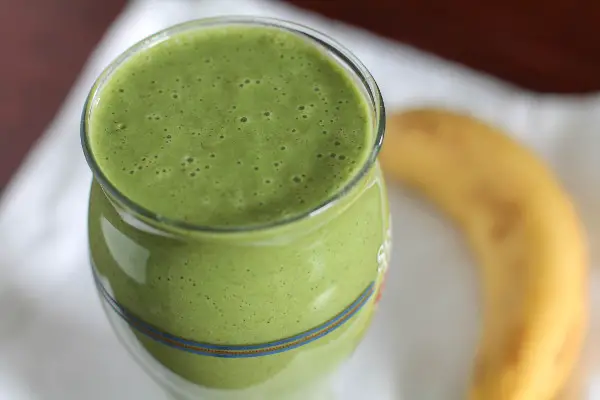
Well, today I’m going to share with you the perfect green smoothie for people who aren’t so keen on greens. This recipe is packed full of goodness and tastes delicious. Even if you do love your greens, it’s a sweet, refreshing alternative to a straight green drink.
Bananas
Having bananas in the morning gives a great boost of electrolytes to help rehydrate, They’re also high in B-vitamins, which will give you a welcome boost to your brain’s function first thing in the morning. They also contain resistant starch, a healthy carbohydrate that helps you feel fuller for longer, and add some creamy sweetness to your smoothie.
Almond Milk
Almond milk is a great alternative to dairy. It is rich in nutrients like magnesium, manganese, zinc, potassium, phosphorus, iron and vitamin E, and is a source of fibre and protein. The high antioxidant content in almond milk can help to suppress free radical activity and support the healthy function of the immune system.
Raw Hemp Seeds
Hemp seeds are among the most nutritious seed in the world. A true gift from nature, hemp seed contains a perfect 3:1 ratio of omega 3 to omega 6 essentially fatty acids, and contain vitamins and minerals like Vitamin E (alpha tocopherol) a powerful antioxidant. Hemp seeds are also 36.6% protein by weight, and are one of the most complete proteins in the plant food kingdom, containing all 21 essential amino acids required for optimal human health (including the 9 that humans can’t produce themselves) in just the right proportions we need.
Cinnamon
Cinnamon is one of the oldest spices used throughout the world – ancient Egypt and China for example. And when you look at all that this spice can add to your life, there’s no wonder the ancients loved it.
According to the U.S. National Library of Medicine, cinnamon can help treat diarrhoea, infections, colds and flus, muscle spasms, vomiting, erectile dysfunction and loss of appetite. Studies also suggest it may help with:
Alzheimer’s disease – Tel Aviv University researchers discovered that cinnamon may help prevent Alzheimer’s disease. According to Prof. Michael Ovadia, of the Department of Zoology at Tel Aviv University, an extract found in cinnamon bark, called CEPPT, contains properties that can inhibit the development of the disease…
HIV – a study of Indian medicinal plants revealed that cinnamon may potentially be effective against HIV-4. According to the study authors, “the most effective extracts against HIV-1 and HIV-2 are respectively Cinnamomum cassia (bark) and Cardiospermum helicacabum (shoot + fruit)…
Multiple Sclerosis – cinnamon may help stop the destructive process of multiple sclerosis (MS), according to a neurological scientist at Rush University Medical Center. Cinnamon could help eliminate the need to take some expensive and unpleasant drugs.
Spice up your life and add some cinnamon to your smoothie! It’s a perfect complement to the almond milk, and helps bring out the sweetness of the banana.
 Zeolite
Adding a few drops of liquid zeolite to the mix will bring some helpful health benefits to this delicious recipe. A natural detoxifier, zeolite is a mineral compound that absorbs, neutralises and removes heavy metals from the body without removing good nutrition. In fact, as zeolite removes the toxins that inhibit nutrient absorption, nutrient levels have been shown to increase with regular use.
Zeolite stabilises pH by absorbing excess protons, helps to balance blood sugar, and reduces allergy symptoms by absorbing antigens, allergens and nitrosamines. Zeolite also appears to activate the p21 tumour suppressor gene in cancer cells, causing tumour cells to stop growing, and showing a decrease in tumour size (source).
Spinach
Finally, what green smoothie would be complete without some greens!?
Spinach is a powerhouse leafy green. It is a very good source of dietary fibre, protein, vitamin A, vitamin C, vitamin E, vitamin K, vitamin B6, thiamin (B1), riboflavin (B2), folate (B9), calcium, iron, magnesium, phosphorus, potassium, copper and manganese. It is also naturally low in saturated fats, and provides a good source of niacin (B3) and zinc. Spinach also has a milder taste than other greens, like Kale.
Ingredients:
2 cups unsweetened almond milk
1 ½ packed cups fresh washed spinach
2 bananas
1/2 cup of ice (unless you’re using frozen bananas)
1 tablespoon of raw hulled hemp seeds
1/2 teaspoon ground cinnamon
10-15 drops of zeolite (I use NCD2 Liquid Zeolite)
1 pinch of pink Himalayan salt
Method:
Blend all ingredients in a blender until smooth.
Handy Hint! If you’re using frozen bananas, cut them into small pieces first in order to not break your blender.
Enjoy your smoothie!
About the author:
 Gavin Bragg is a writer, adventurer and natural health advocate. In late 2007, Gavin’s wife Ashley was diagnosed with an inoperable brain tumour. Western doctors told Ashely her condition was ”terminal” and told her to say her good-bye’s. But Gavin and Ashley “turned East” for their answer to cancer, and discovered the healing properties of a mineral compound, zeolite, commonly used in eastern medicine. Much to the confusion of Western doctors, Ashley treated herself with liquid zeolite and has been clear of cancer for over 5 years, regaining her health and control of her life.
Given purpose by this “second chance”, Gavin and Ashley have become distributors for NCD2 Pure Liquid Zeolite, the product Ashley credits with saving her life. Gavin and Ashley are on a mission to spread the word about natural health alternatives, and hope that natural treatments like zeolite will soon replace the dangerous, ineffective pharmaceuticals that flood the so-called “health care” industry. Visit PureLiquidZeolite.com for information, testimonials, research and more.

By Sayer Ji
Contributing writer for Wake Up World
A scientific review on the coconut palm (Cocos nucifera), which is referred to as “the most naturally widespread fruit plant on Earth”, reveals numerous beneficial biological effects of its various constituents, which include the husk, root, oil, water, and flesh. The study, titled “Cocos nucifera (L.) (Arecaceae): A phytochemical and pharmacological review,” also reviewed the toxicity literature on the coconut palm’s various constituents and found there was no evidence of acute toxicity, and only low toxicity associated with chronic exposure.
The study summarized the story of the coconut palm’s fascinating spread around the world as follows: “The plant is originally from Southeast Asia (Malaysia, Indonesia, and the Philippines) and the islands between the Indian and Pacific Oceans. From that region, the fruit of the coconut palm is believed to have been brought to India and then to East Africa. After the discovery of the Cape of Good Hope, this plant was introduced into West Africa and, from there, dispersed to the American continent and to other tropical regions of the globe.”
The review also summarized the traditional healing applications of the coconut palm. This is an important complementary data set, because though many of the traditional uses have not yet been tested and validated by science, they may actually work exceptionally well for these conditions in actual practice.
Below is a table showing many of these traditional uses:
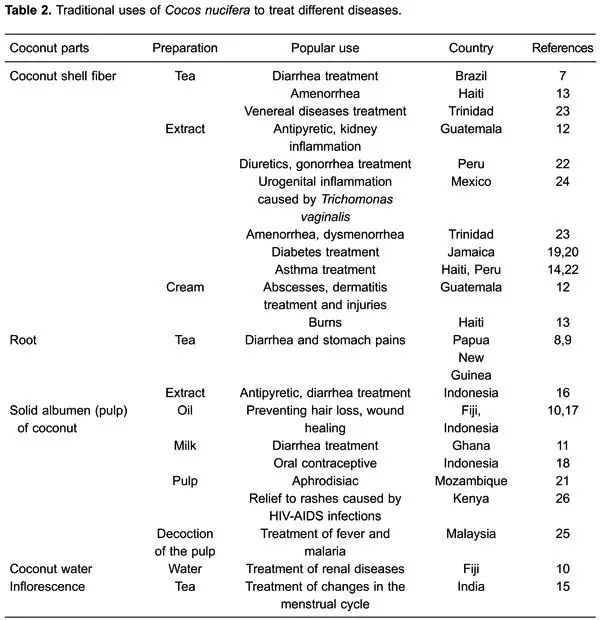
The traditional uses were also summarized in the following paragraph:
“In Brazil, extract from the husk fiber of C. nucifera is used to treat diarrhea (7). In Papua New Guinea, the leaves and roots of young plants are chewed as treatment for diarrhea and stomachaches (8,9). In Fiji, coconut oil is used to prevent hair loss and coconut water is used to treat renal disease (10). In Ghana, people use coconut milk to treat diarrhea (11). In Guatemala, the husk fiber extract is used as an antipyretic, to reduce renal inflammation, and as a topic ointment for dermatitis, abscesses, and injuries (12). In Haiti, a decoction of the dry pericarp is used for oral treatment of amenorrhea, and the oil is applied as an ointment to burns (13); an aqueous extract from the husk fiber is also used for oral asthma treatment (14). In India, infusions made with the coconut inflorescence are used for the oral treatment of menstrual cycle disorders (15). In Indonesia, the oil is used as a wound ointment, the coconut milk is used as an oral contraceptive, and fever and diarrhea are treated with the root extract (16–18). In Jamaica, the husk fiber extract is used to treat diabetes (19,20). In Mozambique, the fruit is consumed by men as an aphrodisiac (21). Peruvians use the aqueous extract of the fresh coconut fiber orally for asthma, as a diuretic, and for gonorrhea (22). In Trinidad, bark extract is used orally for amenorrhea and dysmenorrhea, and bark tea is used to treat venereal diseases (23). In Mexico, coconut is used to treat various disorders associated with urogenital tract infection by Trichomonas vaginalis (24). A decoction of the white flesh of the fruit is used in rural Malaysia to treat fever and malaria (25). In Kenya, the fruit is used to relieve skin rash caused by HIV infection (26).”
The study concluded:
“Cocos nucifera is a widely dispersed plant that has important pharmacological effects with low toxicity. Furthermore, medicinal use of C. nucifera has an environmental appeal, since this plant is widely used in the food industry and use of discarded plant parts will reduce waste and pollution. The pharmacological effects of the plant differ according to the part of the plant or fruit used. Antioxidant activity predominated in the constituents of the endocarp and coconut water. In addition, the fiber showed antibacterial, antiparasitic, and anti-inflammatory activities. Only the ethanolic extract of the root had depressant and anticonvulsant action on the central nervous system. Coconut water seems to have protective effects, e.g., on the kidney and heart, and antioxidant activity, as well as a hypoglycemic effect.”
About the author:

Sayer Ji is the founder of GreenMedInfo.com – an open access, evidence-based resource supporting natural and integrative modalities. He is on the Board of Governors for the National Health Federation and Fearless Parent, a Steering Committee Member of the Global GMO-Free Coalition (GGFC), a reviewer at the International Journal of Human Nutrition and Functional Medicine. Since 2003, Sayer has also served as a patient advocate and an educator and consultant for the natural health and wellness field.
 Dr Akilah - Celestial Healing Wellness Center